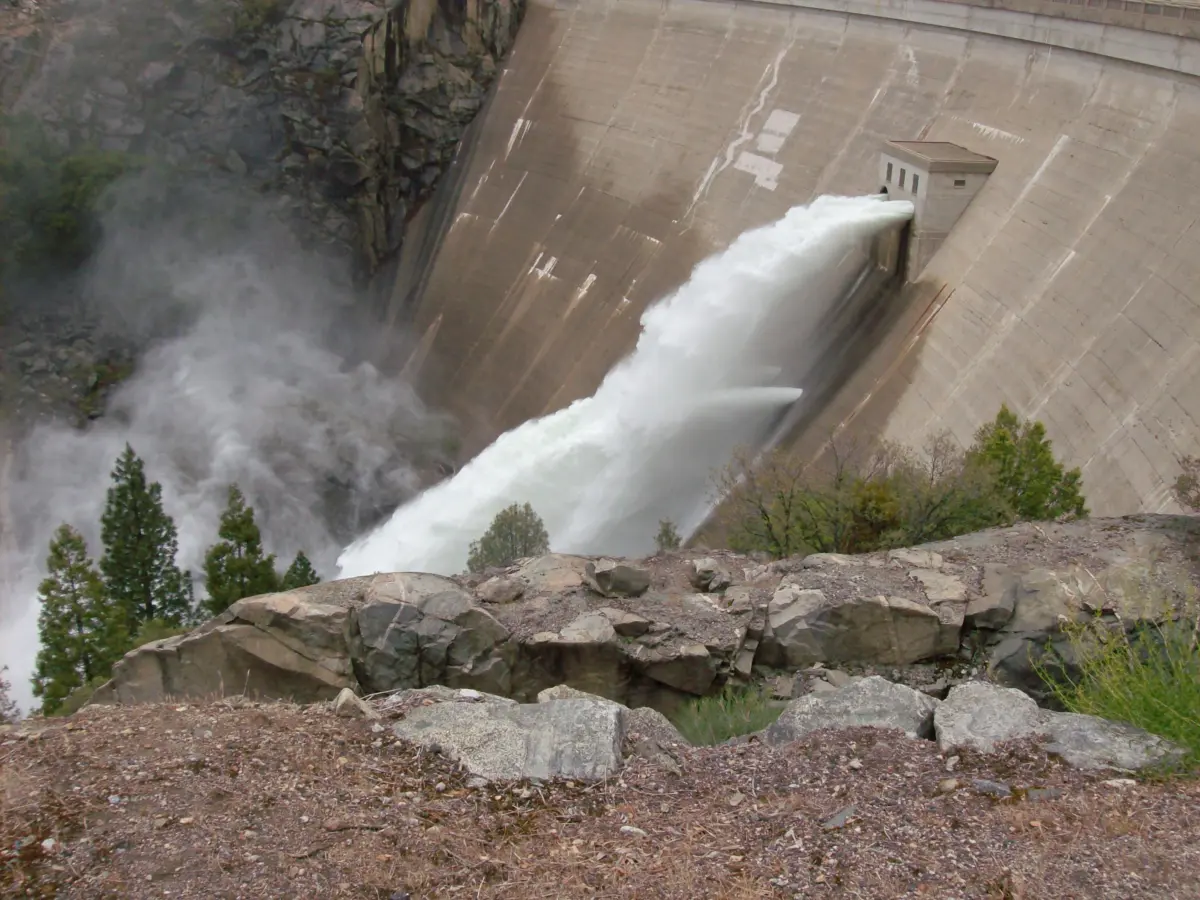
Reservoirs provide water to millions of Californians, but the dams that create them can also degrade the rivers below. In a new study, researchers at UCLA’s Institute of the Environment and Sustainability found that carefully timed flow releases from a dam can reduce excessive algae and improve conditions for aquatic insects that help support river food webs. The study focused on the Tuolumne River below Hetch Hetchy Reservoir in Yosemite National Park and was published May 5th in River Research and Applications.
The work was led by Jeffrey G. Holmquist and Jutta Schmidt-Gengenbach of UCLA’s White Mountain Research Center, one of the UC reserves managed in part by UC Nature, in collaboration with Yosemite National Park and the San Francisco Public Utilities Commission, which manages the Hetch Hetchy system. The setting is unique among US watersheds: Hetch Hetchy is a San Francisco municipal water system inside Yosemite National Park.
“Work like this is a perfect example of what UCLA, federal partners and local government can accomplish together. These results could not have been achieved without passionate researchers, funding support, and a dedication to solving important societal problems.”
– Dean of UCLA Division of Physical Sciences, Miguel García-Garibay.
Holmquist and Schmidt-Gengenbach examined the algae and invertebrates living on the riverbed in the reach below the dam during drought, and compared them with undammed reaches. That comparison matters. To understand how altered the below-dam river has become, the researchers also sampled less-regulated reference sections, including reaches above the reservoir and the Merced River in Yosemite.
“Work like this is a perfect example of what UCLA, federal partners and local government can accomplish together,” said Dean of UCLA Division of Physical Sciences, Miguel García-Garibay. “These results could not have been achieved without passionate researchers, funding support, and a dedication to solving important societal problems.”
The ecological problem is straightforward: Dams change the timing and force of downstream flows, and those altered conditions can allow algae to grow and accumulate on the riverbed. Some algae are natural and beneficial, but heavy mats can shift the insect community away from the species that are more desirable in a healthy mountain river system. By strategically releasing stronger flow pulses from a dam, the researchers say we can scour algae and improve habitat for aquatic insects that are important in river food webs.
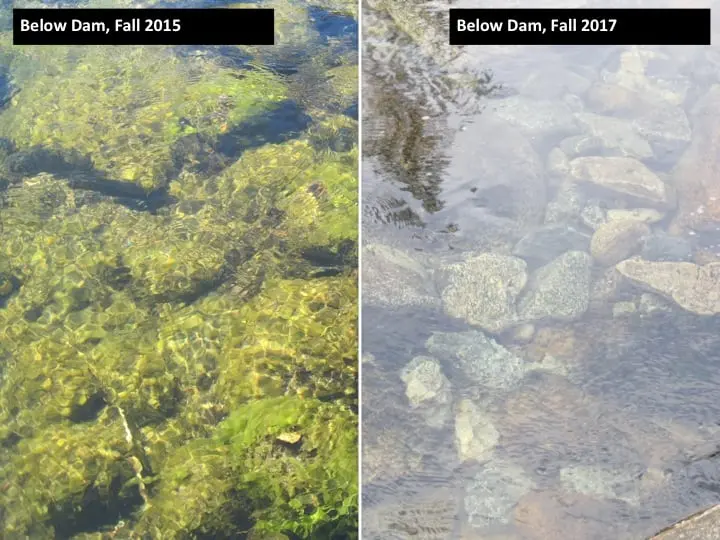
“What this study shows is that dams do not just create ecological problems — they can also be part of the solution,” Holmquist said. “If managers use releases strategically, they can push the river toward healthier conditions without altering the amount of water available to end users.”
The results are especially notable because the study was carried out during drought. Ecological flow releases have been used in other river systems before, but this research proves that engineered releases can still improve river quality even under extremely dry, highly constrained conditions. Just as important, the strategy does not necessarily require reducing water deliveries. Hetch Hetchy Reservoir can store only a limited volume of water, and in wetter periods some water must be released anyway. The approach described by the researchers is to shape part of that water into ecologically useful pulses that mimic a natural spring flooding.
“Water managers are often forced to think in terms of tradeoffs,” Schmidt-Gengenbach said. “But this work shows that when surplus water is released in a way that better approximates natural flow, it can produce meaningful ecological benefits as well.”
The researchers are quick to point out that this does not mean that the river below the dam has been restored to a fully natural condition. Instead, it shows that dam operations can be adjusted in ways that improve river health measurably, even during drought. While it is impossible for modern society to move away from dammed rivers any time soon, this approach reveals a path forward that should allow for the most efficient management of water and energy while putting as little strain on the natural environment as possible.