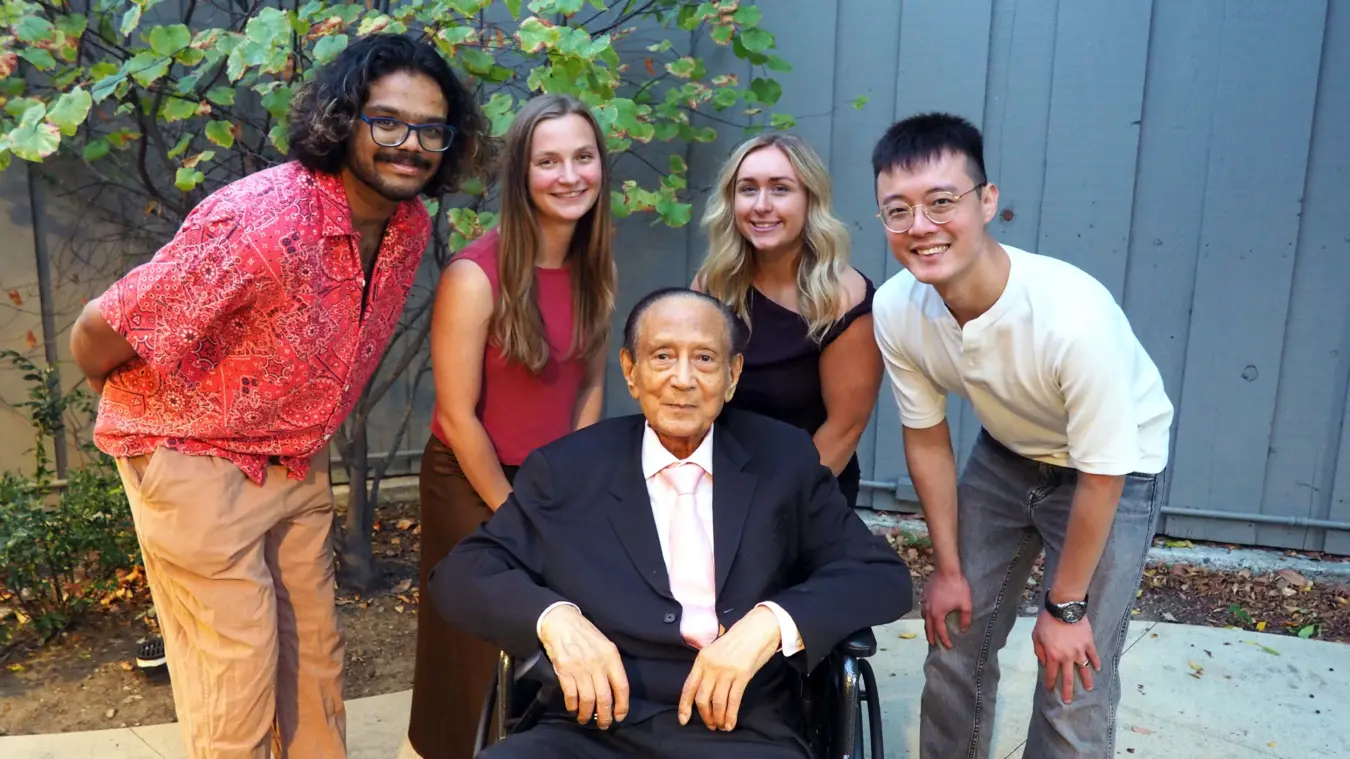
 From Left: Sandeep Joy, Sydney Erickson, Emily Byrd, and Yong Rui Poh with Dr. Mani Bhaumik
The UCLA Division of Physical Sciences celebrated the inaugural class of Bhaumik Prize Postdoctoral Fellows on Tuesday, October 20, welcoming four early-career researchers whose work spans physics, astronomy, chemistry and biochemistry.
Established through a $3 million commitment from physicist, entrepreneur and philanthropist Mani L. Bhaumik, the program provides up to three years of research support, mentorship and professional development opportunities for researchers in UCLA’s departments of Physics and Astronomy and Chemistry and Biochemistry. The fellowship program is expected to support approximately 16 researchers during its initial six-year period.
“Mani Bhaumik has been an extraordinary champion of scientific discovery at UCLA, and this fellowship is another powerful expression of his vision,” said Miguel García-Garibay, dean of the UCLA Division of Physical Sciences. “By bringing exceptional young scientists to UCLA and giving them the freedom to pursue their most ambitious ideas, we are investing in discoveries whose impact may extend far beyond what we can imagine today. We are deeply grateful to Mani for his generosity, his friendship and his unwavering belief in the next generation of researchers.”
Bhaumik began his own career at UCLA as a postdoctoral researcher. His philanthropy has helped establish the Mani L. Bhaumik Institute for Theoretical Physics, a center for fundamental research and intellectual collaboration, as well as the Mani L. Bhaumik Centennial Collaboratory in Chemistry and Biochemistry. Mani is also a long-standing supporter of “Exploring Your Universe”, UCLA’s annual science fair for K-12 students. Thanks in large part to his support, and the dedicated graduate students who organize it, that event has grown into the largest science fair in LA country, bringing over ten thousand people a year to UCLA.
Meet the Inaugural Bhaumik Fellows
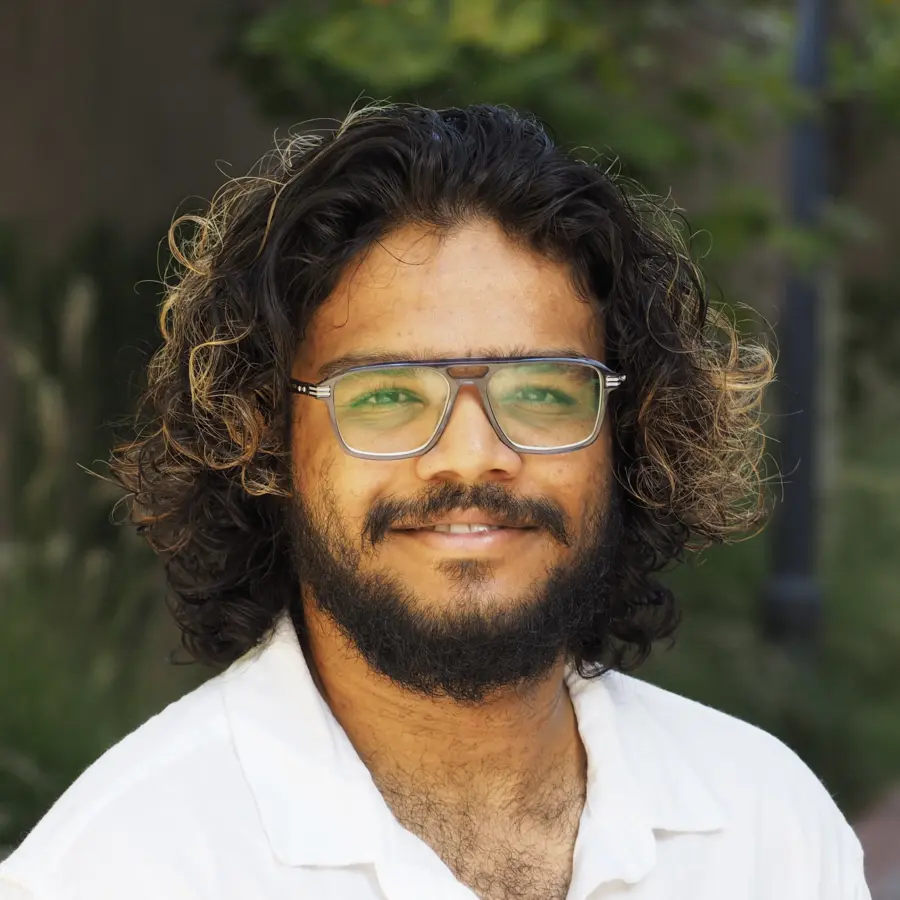
Sandeep Joy
Physics and Astronomy
Sandeep Joy joins UCLA from Florida State University, where he was a Quantum Initiative Postdoctoral Fellow at the National High Magnetic Field Laboratory. He earned his Ph.D. in physics from Ohio State University in 2024. A theoretical condensed matter physicist, Joy studies how interactions between electrons give rise to new phases of matter, including Wigner crystals, in which electrons organize into ordered structures rather than moving freely through a material.
At UCLA, Joy is working with Professor Anshul Kogar to investigate how ultrafast pulses of light can reveal or control unusual electronic states in quantum materials. His theoretical research draws on experimental observations to understand how strongly interacting electrons behave when materials are driven away from their usual stable states.
Joy’s broader research seeks to identify the principles governing collective electron behavior, including how quantum geometry and interactions influence the formation of new phases of matter. These insights could lay the groundwork for designing materials with novel properties, with potential long-term applications in quantum information science and emerging technologies.
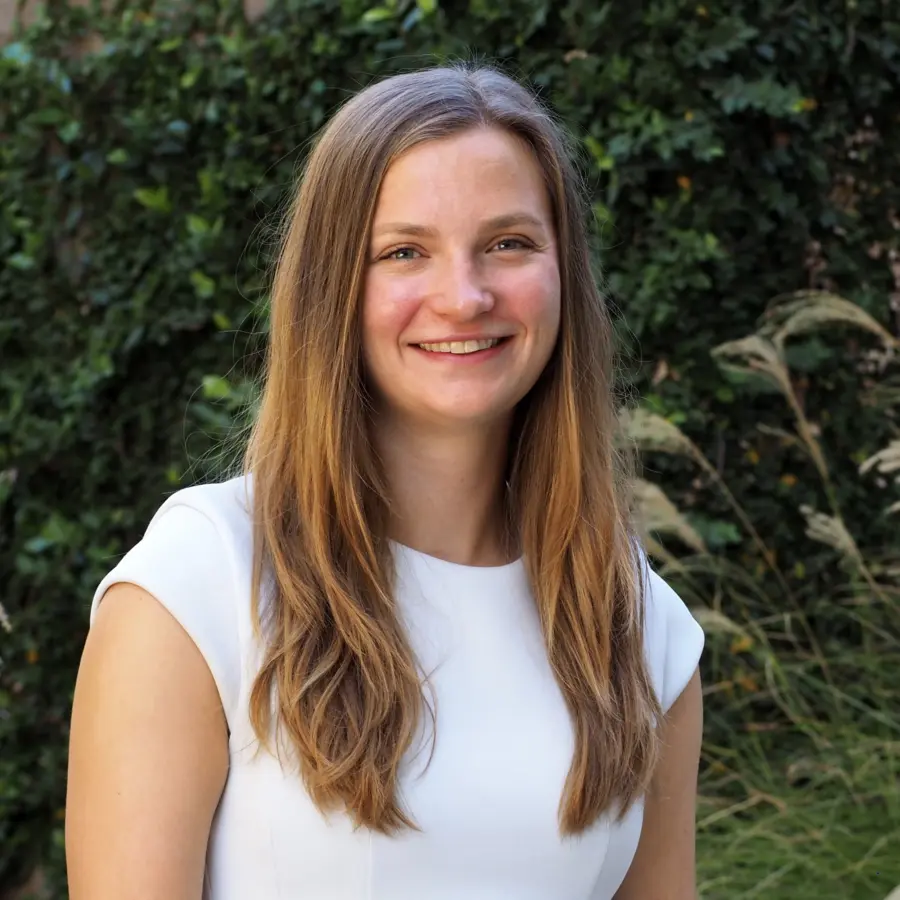
Sydney Erickson
Physics and Astronomy
Sydney Erickson is an astrophysicist studying the expansion of the universe and the fundamental forces shaping its evolution. At UCLA, she is working with Professor Tommaso Treu’s research group, which specializes in gravitational lensing, a phenomenon in which the gravity of massive objects bends light traveling from more distant galaxies and quasars.
Erickson uses gravitational lensing to measure how quickly the universe is expanding and investigate the nature of dark energy, the mysterious phenomenon associated with the accelerating expansion of the cosmos. She is developing methods that combine machine learning, statistical analysis and observations from major astronomical surveys, including the Vera C. Rubin Observatory, to study hundreds or potentially thousands of gravitational lenses.
Her goal is to develop increasingly precise, independent measurements of cosmic expansion that could help answer fundamental questions about the history and future of the universe. Her work at UCLA combines expertise in large-scale astronomical surveys with the Treu group’s research in precision cosmology.
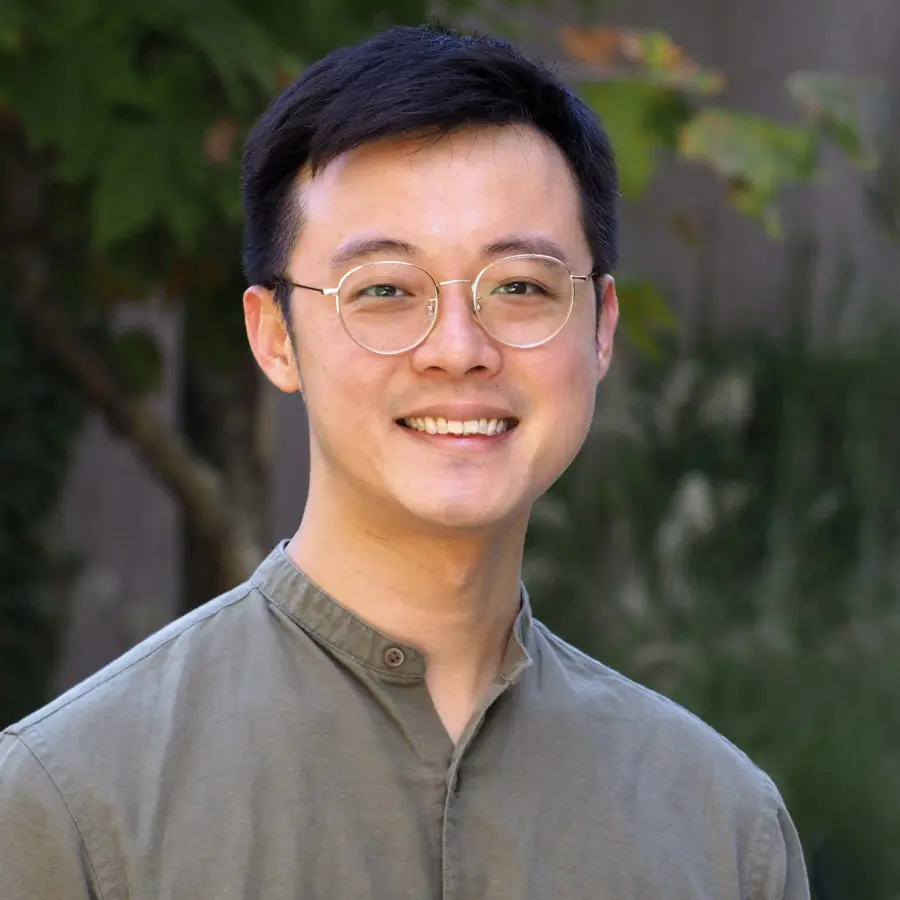
Yong Rui Poh
Chemistry and Biochemistry
Yong Rui Poh is a theoretical chemist whose research draws on concepts from multiple scientific disciplines to develop new approaches to chemical problems. He earned his bachelor’s degree in chemistry from the National University of Singapore, where he studied methods for organic synthesis, before completing his Ph.D. in theoretical chemistry at UC San Diego under Professor Joel Yuen-Zhou.
His doctoral research crossed several fields, including quantum information science, electrochemistry, chiral synthesis and polariton chemistry. At UCLA, Poh is conducting postdoctoral research in the laboratory of Professor Anastassia Alexandrova, whose group uses theoretical and computational approaches to investigate chemical systems and catalytic processes.
Poh’s research focuses on non-equilibrium thermodynamics and its potential to improve heterogeneous catalysis, in which catalysts accelerate chemical reactions involving substances in different physical phases. By exploring how chemical systems behave outside equilibrium, he hopes to uncover principles that can inform the design of more effective catalytic processes.

Emily Byrd
Chemistry and Biochemistry
Emily Byrd comes to UCLA following research at the University of Leeds in the United Kingdom, where she earned her Ph.D. and conducted postdoctoral research using advanced mass spectrometry techniques to investigate the structures and behavior of proteins associated with neurodegenerative diseases.
At UCLA, Byrd is working with Professor Joseph Loo in the Department of Chemistry and Biochemistry, building on collaborations with researchers at Vrije Universiteit Amsterdam. Her work focuses on developing mass spectrometry methods that allow scientists to examine proteins in complex biological samples while preserving information about their structures and interactions.
Byrd is particularly interested in using extremely fine nanopipettes to improve the analysis of proteins found in cerebrospinal fluid. These techniques could help researchers better characterize proteins associated with neurodegenerative diseases and potentially identify biological markers for earlier and more precise detection.