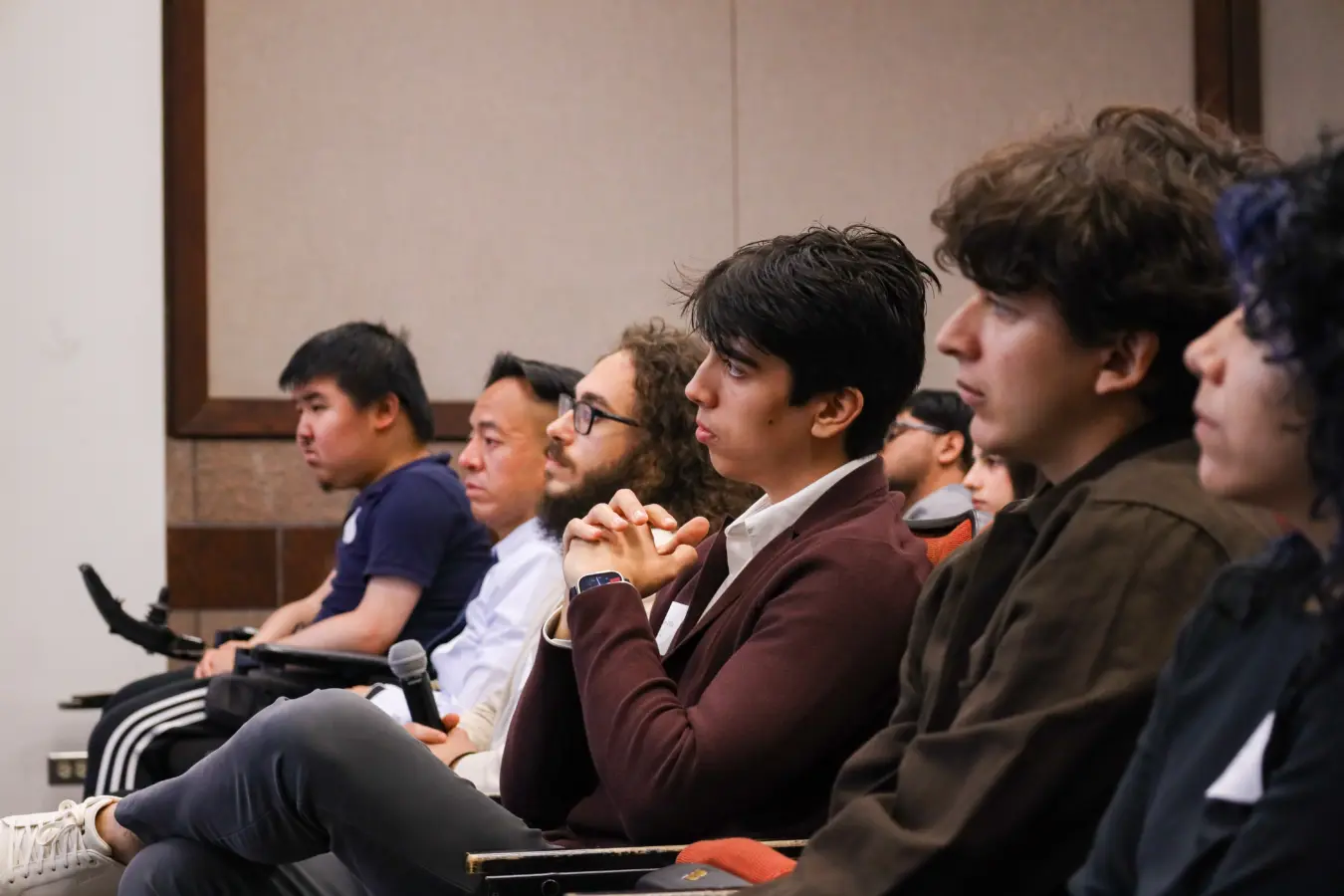
 Photo Credit Nick Crabtree
 Last month, the inaugural Exploring Physics at UCLA event was hosted at the Fowler Museum. The event was moderated and organized by Continuum at UCLA, a student-led organization dedicated to advancing the understanding and appreciation of physics. It was a full day exploring five subfields in physics and emphasizing high-level intuition over technical derivations. In a rare opportunity, physics and STEM majors from all over Southern California were able to connect with each other to share ideas and perspectives. This event was graciously funded by the Campus Programs Committee of the Program Activities Board at UCLA.
The first-of-its-kind event at UCLA included 161 attendees, spanning 45 institutions and 30 different majors, as well as 5 featured speakers, fireside chats, and an audience Q&A. From experimental quantum hardware to neurophysics to theoretical condensed matter to dark matter to plasma physics and more, students were exposed to the possibilities of the pursuit of physics.
“This event was organized to inspire high school, community college physics, and physics-adjacent majors with the discipline’s real-world impact, provide clear guidance on pathways from community college to research and careers,” said organizer and Continuum at UCLA president Sherry Peng. “We showcased the breadth of physics and provided insight from local faculty, UCLA graduate students, and successful physics transfers, and created in-person connections among physics students across Southern California.
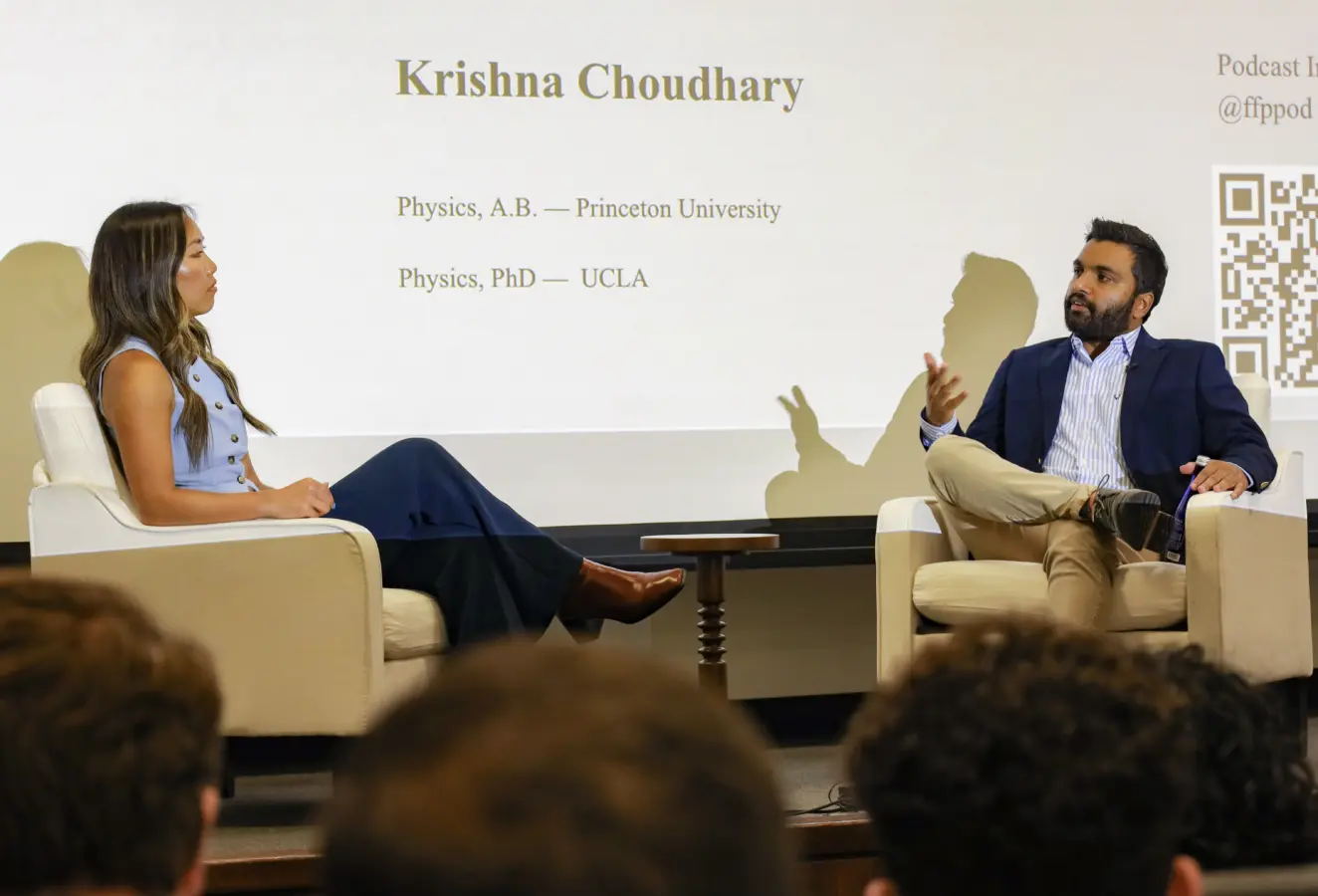
Opening remarks were delivered by Stuart Brown, chair of the UCLA Physics Department. “It was exciting to see so many young people from around the LA area come together at UCLA for this event,” said Brown. “Physics is having a profound impact on the world today in so many areas, and this event helped inspire the next generation of students to push the field further.”
Rapid 30-minute research talks were paired with intimate, podcast-style fireside chats and open audience Q&As with UCLA/USC faculty, including the chair of physics at USC, and featured guest Krishna Choudhary, PhD. “What sets this event apart is its emphasis on a crucial but often underemphasized skill in science: the ability to translate high-level research into approachable concepts,” said Choudhary. “By making complex fields of physics accessible, the event opens the door for an incredible, often-overlooked pipeline of ambitious students from neighboring community colleges. It proves that top-tier research belongs to anyone with the drive to learn.”
Attendee and community college student Julia Plummer agreed with Choudhary’s analysis. “The speakers knew exactly how to tell a story through science, simplifying complex, PhD-level concepts to the finest detail,” she said. “For a community college student deciding where to transfer, having the opportunity to network directly with faculty was invaluable. I saw that my goal of transferring to a UC for physics is truly achievable.”
About Continuum
Continuum is built around the idea that physics can be communicated clearly without sacrificing depth, regardless of audience background. We believe the most effective way to make physics accessible is through fast-spreading, dense, and accurate information, open to a broad audience. This includes curating initiatives that naturally encourage intellectual engagement and hold prestige, which increases participation and attracts strong applicants.
More broadly, Continuum promotes the communication of high-level physics to a general but intellectually engaged audience without sacrificing rigor. This approach aligns with the core values of science, as access to clearly articulated ideas is essential for innovation, critical inquiry, and meaningful progress. Through its initiatives, Continuum strives to recognize and elevate students who can distill complex physical concepts into clear, compelling explanations, advancing how science is understood, shared, and trusted beyond the classroom.
While Continuum is rooted in physics, many of the most important questions in science lie at the intersection of disciplines. Continuum creates platforms that encourage dialogue across the natural sciences. Physics, chemistry, and biology increasingly converge in areas such as medical imaging, materials science, quantum computing, and biotechnology. By encouraging clear communication across these domains, these initiatives can highlight how interdisciplinary thinking drives scientific progress and innovation.