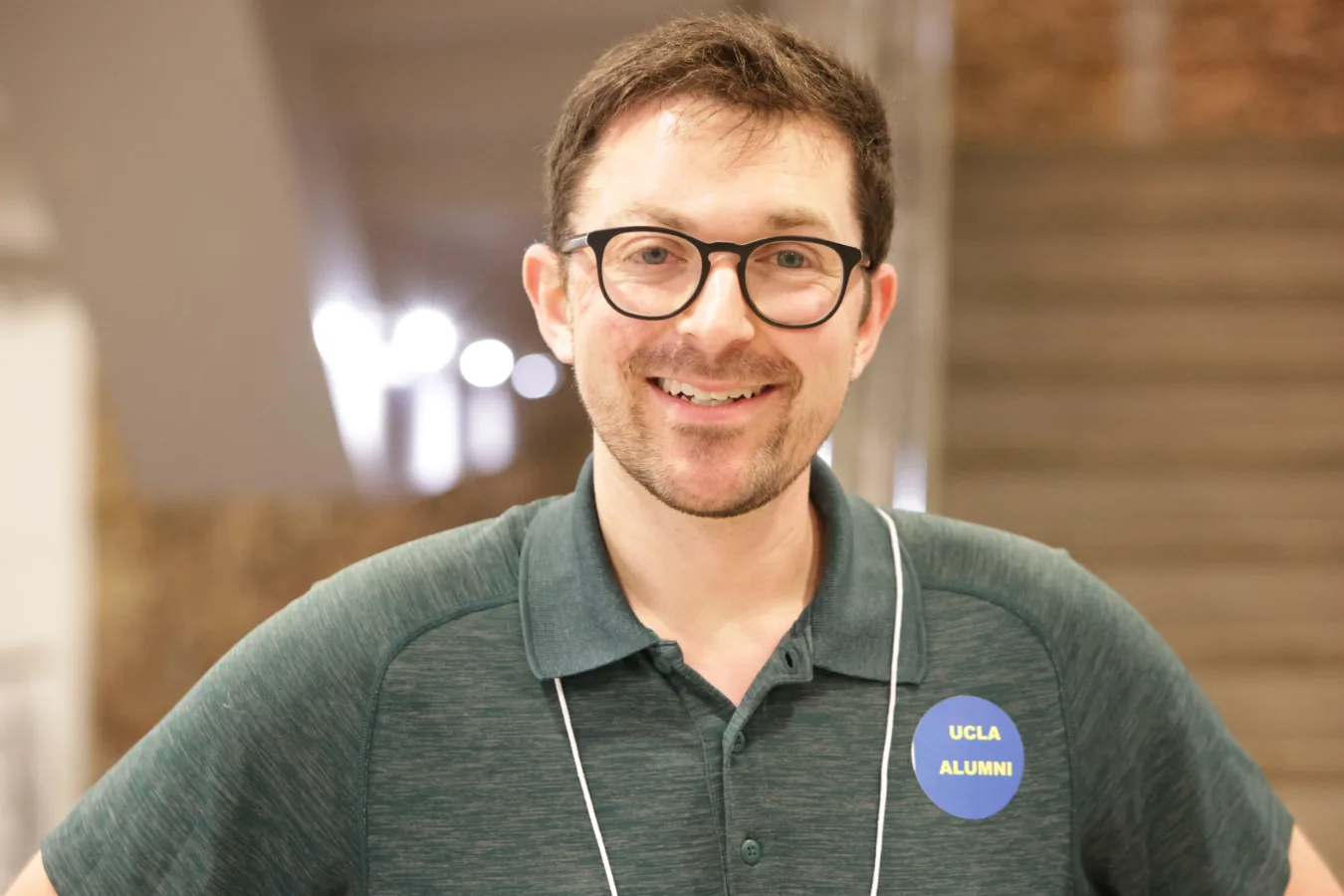
What attracted you to the DataFest event? And how long and in what capacity have you been involved?
My first DataFest was in 2015. It was at the end of my second year at UCLA, and the Stats department faculty hyped up the event. Most of my professors had moved their midterms to accommodate students’ participation, so there was no excuse for availability and it seemed like a good opportunity to get exposure to real-world data and client work. I had summer plans to work on campus, so this experience was as close to a 2nd-year internship as I was going to get. A team of seniors let me join their team, which was a phenomenal learning opportunity as I had limited coursework on applied methods at the time. I had a great time connecting with my team, meeting peers who would ultimately be TAs in my subsequent courses, and getting to know the professors who volunteered their time to oversee the weekend-long event. It gave me a great appreciation for the dedication and camaraderie of the department.
The next year, I joined the student planning committee for the event. We worked on fundraising and coordinating event space with the on-campus residence halls. It is not a cheap event, but every year the Stats club committee and DataFest faculty chairs do what is needed to keep it free for participants. I also participated in the 2016 event, and my team took home Best Visual. That year I also connected with an industry mentor who ultimately gave me my first internship experience and first job out of college.
I’ve been an industry mentor myself nearly every year since! DataFest was a highlight of my college experience, and I attribute a lot of my early post-collegiate success to the event, so I love being able to give back to the department and students.
Statistics and Data Science has been the fastest growing department at UCLA for several years, and DataFest has grown along with it. What factors have contributed to this and where do you see the field going in the future?
Rob Gould and Linda Zanontian, and the rest of the Stats Department Faculty. They care so much and take so much pride in the department and DataFest, and that passion is what fuels the growth year over year. A lot of other programs can make claim to being the most akin to the buzzy field of AI. But the foundation to some of today’s most important applications is Stats, and it’s hard to get a good understanding of these without at least a basic understanding of statistics.
Why, especially now, is this event more important than ever?
The rise of AI has made entry level roles and internships scarcer and applying to jobs a near-black box. This event gives students experience with real-world problems and data, and it helps connect students to industry mentors to show off some of their skills. That experience and personal connection go such a long way to landing future opportunities.
What is the most important thing you learned from DataFest?
The best solution isn’t always the most complex (or even most accurate) model. Sometimes, a simple visual or a model whose inner workings can be easily explained is what matters most to clients. I’ve seen this time and again in my work, especially when dealing with less-technical stakeholders. DataFest gives you a weekend to formulate a solution and 5 minutes to pitch it at the end of the weekend. Clear communication is not always something you expect to learn in a math-heavy degree, but this event reinforces the importance of it!
What is one thing you would want future DataFest participants to know about the event?
DataFest has very humble beginnings. The first few years were set up in a small classroom with only a handful of students participating (it was a much smaller department then too). The event has since exploded in size, but the group of people who make it happen behind the scenes hasn’t changed all that much. It’s a special group of people who have made this event what it is today.
Take the time to meet them and you’ll see they are more passionate than ever about DataFest. They’re also just great people to know as you progress through your degree, and the connection to DataFest will help you stand out among the sea of other students. Also, remember to have fun! This is a low stakes opportunity to flex your skills and get feedback from professionals — take full advantage!
You are also a dedicated financial supporter of DataFest and the department. What does giving mean to you and how have you seen the impact of giving on our students?
Giving to the department and DataFest is deeply personal for me. I received aid to help finish my degrees, and as a 2x participant and student chair for DataFest planning I saw how much it takes to host such a large event. While the big industry sponsorships are certainly helpful in reaching fundraising targets, the individual contributions from alumni that grew year over year allowed the event to grow to what it is today. I am humbled to be at a point in my career that allows me to now give back. I continue to give to the department and DataFest because I know any gift, small or large, contributes to meaningful activities and outcomes for today’s students.
Support from our community helps make events like DataFest possible.
Please review UCLA and the UCLA Foundation’s
Disclosure Statements for Prospective Donors at
https://www.uclafoundation.org/disclosures
M-52324
Gifts are managed and invested in accordance with UCLA’s endowment investment policies. The total return earned in excess of the amount approved annually for payout will be retained in the endowment principal to protect from the effects of inflation and to allow for growth. At the Chancellor’s discretion, when the payout is not needed for purposes of the fund, the return of payout may be added to the endowment fund principal. In the event the fund does not reach endowment minimum; or the program ceases to exist at UCLA, proceeds from the fund will be utilized in an area and manner as closely related as possible to the original intent and purposes for which the fund was established.