UCLA’s Bhaumik Prize Postdoctoral Fellows Program fuels rising scientists with three years of support, mentorship, and discovery.
The Departments of Chemistry and Biochemistry and Physics and Astronomy at the University of California, Los Angeles (UCLA) invites nominations for the Bhaumik Prize Postdoctoral Fellows Program. This newly instated program seeks to bring the brightest young scientists to UCLA to expand their scientific training, make new discoveries, and network with interdisciplinary scientists of all stages. The Bhaumik Prize Postdoctoral Fellows Program is made possible by the philanthropy of physicist and entrepreneur Dr. Mani L. Bhaumik. The program supports three fellows annually for a three-year postdoctoral position.
The Fellows will be mentored by participating UCLA Faculty and perform research within their laboratory. They will receive an annual salary, benefits, travel funds, and participate in a variety of professional development activities. Qualified applications will have had exceptional graduate careers, receiving their PhD between September 2024 and August 2027.
Bhaumik Prize Postdoctoral Fellows are nominated by leading PhD scientists within physics, astronomy, chemistry, biochemistry, and associated fields. Self-nominations are not allowed. Nominations are due October 24, 2026. Applicants invited to submit full applications will be notified by November 15, 2026 with full applications due on December 15, 2026. Full applications will include a statement from a participating UCLA faculty member, committing to mentoring the applicant. Awards will be announced in January 2027. The fellowship will start on September 1, 2027. Applicants must have a confirmed PhD degree by the start of the fellowship. No deferrals will be allowed.
Current Fellows
Please click here to submit your nomination. Nominations are due on October 31, 2026 at 11:59 pm. Nomination forms cannot be saved so please have all information ready (listed below). Please ensure that the nominee’s email will be valid after graduation.
- Nominee first name
- Nominee last name
- Nominee email
- Nominee telephone number
- Nominee current institution
- Nominee PhD institution
- Date of PhD degree
- Nominator first name
- Nominator last name
- Nominator title
- Nominator institution or workplace
- Nominator email
- Nominator telephone
- Proposed faculty host 1
- Proposed faculty host 2
- Proposed faculty host 3
- Upload: Nomination statement as PDF, dated, signed on letterhead
- Upload: PDF C.V. of nominee, including publications
Participating Faculty
Chemistry & Biochemistry

Anastassia Alexandrova
Professor
Office: YH 2077B
Email: alexandrova@g.ucla.edu

Soumitra Athavale
Assistant Professor
Office: YH 5072A
Email: athavale@g.ucla.edu

Victoria Barber
Assistant Professor
Office: YH 3077B
Email: vbarber@g.ucla.edu

Justin Caram
Associate Professor
Office: YH 3077A
Email: jcaram@ucla.edu

Stuart Conway
Professor
Office: YH 5070A
Email: stuartconway@chem.ucla.edu

Paula Diaconescu
Professor
Office: MSB 1515
Email: pld@chem.ucla.edu

Abigail Doyle
Professor
Office: MSB 3515
Email: abigaildoyle@g.ucla.edu

Xiangfeng Duan
Professor
Office: MSB 2505B
Email: xduan@chem.ucla.edu

David Eisenberg
Distinguished Professor
Office: Boyer Hall 201
Email: david@mbi.ucla.edu

Thomas Fay
Assistant Professor
Office: YH 3042A
Email: thomaspfay@ucla.edu

Juli Feigon
Distinguished Professor
Office: Boyer Hall 241
Email: feigon@mbi.ucla.edu

Miguel García-Garibay
Dean of Physical Sciences
Distinguished Professor
Office: MSB 4505C
Email: mgarciagaribay@college.ucla.edu

Neil Garg
Distinguished Professor
Office: MSB 5505C
Email: neilgarg@g.ucla.edu

Osvaldo Gutierrez
Professor
Office: YH 4015
Email: o.gutierrez@g.ucla.edu

Richard Kaner
Distinguished Professor
Office: MSB 2515
Email: rbk@chem.ucla.edu

Ohyun Kwon
Professor
Office: MSB 3505C
Email: ohyun@chem.ucla.edu

Chong Liu
Associate Professor
Office: MSB 2505C
Email: chongliu@chem.ucla.edu

Heather Maynard
Professor
Office: MSB 4505B
Email: maynard@chem.ucla.edu

Stefan Petrovic
Assistant Professor
Office: Boyer Hall 256
Email: spetrovic@ucla.edu

Jose Rodriguez
Associate Professor
Office: 103 Boyer Hall
Email: jrodriguez@mbi.ucla.edu

Danielle Schmitt
Assistant Professor
Office: YH 5040A
Email: dlschmitt@g.ucla.edu

Benjamin Schwartz
Distinguished Professor
Office: YH 2077A
Email: schwartz@chem.ucla.edu

Kali Kappel
Assistant Professor
Office: YH 4037
Email: kallikappel@ucla.edu

Alexander Spokoyny
Department Chair
Professor
Office: MSB 1505B
Email: spokoyny@ucla.edu

Antonio Tinoco Valencia
Assistant Professor
Office: YH 4006
Email: atinocovalencia@g.ucla.edu

Sarah Tolbert
Distinguished Professor
Office: YH 3045A
Email: stolbert@ucla.edu

Paul Weiss
Professor
Office: YH 3041
Email: psw@cnsi.ucla.edu

Hong Zhou
Professor
Office: CNSI 5511-C
Email: hong.zhou@ucla.edu

Pri Narang
Professor
Email: prineha@ucla.edu

Rob Clubb
Professor
Office: Boyer Hall 602
Email: rclubb@mbi.ucla.edu
Steffen Lindert
Associate Professor
Office: 5072A
Email: linder@ucla.edu
Physics & Astronomy

Michail Bachtis
Professor
Office: Knudsen 4-107F
Email: bachtis@ucla.edu

Zvi Bern
Distinguished Professor
Office: PAB 4-925
Email: bern@physics.ucla.edu

Tuan Do
Associate Professor
Office: PAB 3-945
Email: tdo@astro.ucla.edu

Michael Fitzgerald
Professor
Office: 3-949 PAB
Email: mpfitz@ucla.edu

Pradip Gatkine
Assistant Professor
Office: PAB 3-915
Email: pgatkine@astro.ucla.edu

Andrea Ghez
Distinguished Professor
Office: PAB 3-911
Email: ghez@astro.ucla.edu

Eric R. Hudson
Professor
Office: PAB 4-429
Email: hudson@physics.ucla.edu

Zhongbo Kang
Professor
Office: Knudsen 5-114
Email: zkang@physics.ucla.edu

David Leibrandt
Professor
Office: PAB 4-339
Email: leibrandt@physics.ucla.edu

Jianwei (John) Miao
Professor
Office: Knudsen 3-108
Email: miao@physics.ucla.edu

Smadar Naoz
Professor
Office: 3-907 PAB
Email: snaoz@astro.ucla.edu

Rene Ong
Distinguished Professor
Office: Knudsen 4-154A
Email: rene@astro.ucla.edu

Erik Petigura
Associate Professor
Office: PAB 3-724
Email: petigura@physics.ucla.edu

David Saltzburg
Distinguished Professor
Office: Knudsen 4-107C
Email: dsaltzbe@ucla.edu

Qianhui Shi
Assistant Professor
Office: Knudsen 6-137B
Email: qshi@physics.ucla.edu

Mikhail P. Solon
Associate Professor
Office: PAB 4-923
Email: solon@physics.ucla.edu

Tommaso Treu
Distinguished Professor
Office: PAB 3-718
Email: tt@astro.ucla.edu

Christopher Gutierrez
Assistant Professor
Office: Knudsen 6-130H
Email: tt@astro.ucla.edu

Anshul Kogar
Assistant Professor
Office: Knudsen 6-130N
Email: anshulkogar@physics.ucla.edu

Alice Shapley
Professor
Office: PAB 3-931
Email: aes@astro.ucla.edu

Alvine Kamaha
Assistant Professor
Office: Knudsen 4-107b
Email: akamaha@physics.ucla.edu
Paulo Alves
Associate Professor
Office: PAB 4-909
Email: epalves@physics.ucla.edu
Nominee Qualifications
- PhD in physics, astronomy, chemistry, biochemistry or related field
- PhD conferred between September 2024 and August 2027
- No employment history at the University of California, Los Angeles (UCLA undergraduate alumni are eligible; MS and PhD alumni are ineligible)
- Less than two years of postdoctoral research between PhD and Fellowship start date
- No previous employment with a professorship title
- US citizen, permanent resident, or eligibility for J1 Visa
- English language proficiency
Fellowship Terms
- Three-year award: 9/1/27–8/31/30
- Annual salary: $90,000
- Travel stipend: $2,000
- Health, dental, vision and other optional benefits are provided
- All UCLA postdocs are represented by the UAW and subject to the terms of the current collective bargaining agreement found here
- Networking and professional development events designed for members of the Bhaumik Prize Postdoctoral Fellowship cohort
Nomination Instructions
- Nominations are due on October 31, 2026
- Nominations must be from a PhD scientist within the field
- Nomination statement should briefly describe why the nominee is an exceptional candidate for a Bhaumik Prize Postdoctoral Fellowship, highlighting the impact of their work to date and potential to become a future leader in the field. Comparisons to others within the field are encouraged
- Nomination statement should be signed, dated, on letterhead, and specific to the Bhaumik Prize Postdoctoral Fellowship program.
- Self-nominations are not accepted
- Partial nominations cannot be saved. The nomination submission page states the specific fields necessary for the nomination.
Application Instructions
- A link to where to submit the application will be provided by November 15, 2026 to all nominees invited to move to the full application stage.
- Applications are due on December 15, 2026
- Letters of reference & host statements are due on December 20, 2026
- Complete all requested biographical information
- Upload a cover letter
- Upload a cv with complete publication list, the list of publications should only include those that are published, in press, or submitted
- Upload an official PhD transcript with confirmation of degree. If the degree has not yet been conferred, upload the most recent PhD transcript and an updated version will be requested at a later date.
- Upload a 2 page research statement summarizing your contributions to science to date at a level that can be understood by a broad scientific committee.
- Upload a 2 page research proposal describing the work you plan to achieve during your time as a Bhaumik Prize Postdoctoral Fellow.
- Arrange for a host statement from a participating UCLA faculty member (found here) confirming their commitment to mentor you.
- Arrange for the submission of 2 additional letters of reference from PhD scientists. These letters should not be from your UCLA host.
- Please do not include any reprints or other materials.
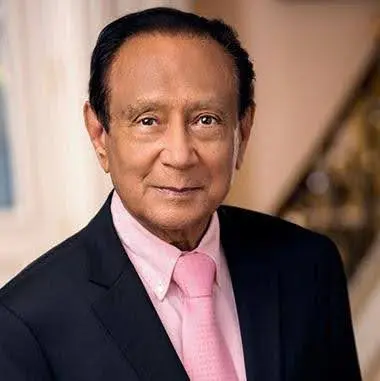
Dr. Mani L. Bhaumik has been a dedicated supporter of UCLA, making transformative contributions that advance research and education. In 2025, his $3 million commitment launched the Bhaumik Postdoctoral Fellowship program, which helps UCLA recruit top postdoctoral scholars in physics, astronomy, and chemistry.
A champion of students, postdoctoral researchers, and faculty alike, Bhaumik’s past gifts to UCLA have supported many important initiatives, including the establishment of the Mani L. Bhaumik Institute for Theoretical Physics—a research center dedicated to advancing fundamental physics through theoretical research, collaboration, and education—and the Mani L. Bhaumik Centennial Collaboratory in the Department of Chemistry & Biochemistry, a hub for collaborative science. Through these gifts, Bhaumik has strengthened the university’s ability to drive discovery and innovation across multiple scientific disciplines.
Bhaumik rose from poverty to become an eminent scientist who played a key role in developing the laser technology that paved the way for Lasik eye surgery. He was born in a remote village in West Bengal, India, and as a child slept on rags in the thatched-roof mud hut he shared with his parents and six siblings.
“My family didn’t always know where our next meal would come from,” he said. “I didn’t own a pair of shoes until I was 16 and walked four miles to school and back in my bare feet.”
Life was made even more precarious by the struggle for Indian independence going on around him: Bhaumik’s father, a freedom fighter, was often away and spent time in prison for his revolutionary activities. But Bhaumik’s dreams of a brighter future gave him the determination to obtain a good education, and his prodigious curiosity led him to become a scientist.
Studying under renowned physicist Satyendra Bose, he earned a master’s degree at the University of Calcutta. In 1958, Bhaumik became the first student to earn a doctorate, also in physics, from the Indian Institute of Technology Kharagpur.
Bhaumik came to UCLA in 1959 “with $3 in my pocket,” he said, on a Sloan Foundation postdoctoral fellowship. The people of his village raised the money for his airfare.
“I thought I’d died and gone to heaven,” he said of his arrival on campus. “Everyone was treated equally, not like back at home where the poor were treated like dirt.”
In 1961, Bhaumik joined Xerox Electro-Optical Systems as a laser scientist. He later served as director of the laser technology laboratory at Northrop’s corporate research laboratory. In 1973, he announced the conclusive demonstration of the world’s first efficient excimer laser, a form of ultraviolet laser now commonly used for high-precision machining and for cutting biological tissue cleanly without damaging surrounding tissue.
Bhaumik is a fellow of the American Physical Society and of the Institute of Electrical and Electronics Engineers and, in 2011, the Indian government awarded him the prestigious Padma Shri for distinguished service in science and engineering.
As a member of the UCLA Physical Sciences board of visitors, Bhaumik has witnessed declining funding for scientific research from state and federal government, particularly in the field of theoretical physics.
“It’s very difficult to raise funds for this area, because people don’t understand what theoretical physicists do,” Bhaumik said. “But physics holds the answers to the most fundamental questions of our very existence. Imagine what could be solved right here at UCLA.”
With previous donations to UCLA, he established the Mani L. Bhaumik Presidential Chair in Theoretical Physics and supported the work of a research group led by physics professor Zvi Bern.
Bhaumik also has found creative ways to spark the public’s intellectual curiosity. He is the author of two books, “Code Name God” and “The Cosmic Detective,” and the creator of an award-winning animated TV series, “Cosmic Quantum Ray.”
In India, Bhaumik’s rags-to-riches story has inspired generations of young people. He established the Mani Bhaumik Educational Foundation to support high-achieving Indian students and donated land for the proposed Bhaumik International Center for Advanced Research at the Indian Institute of Technology.
Does my nomination to come from a UCLA faculty memer?
No. Any PhD Scientist within your field (broadly defined) can be your nominator.
Do I need to have multiple nominations?
No. Only one nomination will be considered.
Do I need to list 3 faculty members, even if I already have a confirmed faculty host?
Yes. Please list 3 faculty members you are interested in.
Do I have to have a faculty host confirmed at the nomination stage?
No this is only required at the application stage.
I graduated with my PhD from UCLA, am I eligible to apply?
No, UCLA MS and PhD recipients are not eligible for this fellowship.
I graduated from UCLA with a BS degree, am I eligible to apply?
Yes, a bachelor’s degree from UCLA does not prohibit eligibility.
Does my nomination letter count as a recommendation letter?
No, your nomination letter is separate from your recommendation letters. If you would like your nominator to act as a reference, please request a separate letter from them at the full application stage.
The Bhaumik Prize Postdoctoral Fellows Program, made possible by a $3 million commitment from physicist, entrepreneur and philanthropist Mani L. Bhaumik, not only strengthens UCLA’s standing as a destination for rising scientists, but ultimately will serve to shape a better future through the contributions they will make to our academic community and to the world.
Launching as a pilot initiative within the division of physical sciences, the program will support outstanding scholars conducting research and engaging in service activities — including in the areas of policy and science engagement with the public — in all areas of chemistry and biochemistry as well as physics and astronomy. Each year for four consecutive years, four postdoctoral fellows will be recruited and appointed for up to a three-year term. The pilot program will support a total of approximately 16 fellows over a six-year span.
“The importance of a postdoctoral fellowship program cannot be overstated. It allows us to recruit energetic, rising scholars with great potential, who will be free to come to UCLA and do their best work,” said Stuart Brown, chair of the UCLA Department of Physics and Astronomy. “We will be reaching out to departments throughout the U.S. and abroad to boost visibility, and we’re really looking forward to seeing how it evolves over time.”
The program also will support interaction across disciplines, career development opportunities, and training in intellectual property and entrepreneurship, with the goal of helping participants develop successful independent careers as principal investigators, scientific leaders, or entrepreneurs at top academic, governmental or industrial institutions.
“The best thing about all of this is that we don’t yet know what new discoveries will be made, because they will be fundamentally rooted in the work and talents of the postdocs that we will recruit,” said Alexander Spokoyny, chair of the UCLA Department of Chemistry and Biochemistry. “They will be the drivers of these innovations. That’s the most exciting aspect of working in science: you have no idea what you’re going to

Emily Byrd – Chemistry and Biochemistry
Emily Byrd comes to UCLA following research at the University of Leeds in the United Kingdom, where she earned her Ph.D. and conducted postdoctoral research using advanced mass spectrometry techniques to investigate the structures and behavior of proteins associated with neurodegenerative diseases.
At UCLA, Byrd is working with Professor Joseph Loo in the Department of Chemistry and Biochemistry, building on collaborations with researchers at Vrije Universiteit Amsterdam. Her work focuses on developing mass spectrometry methods that allow scientists to examine proteins in complex biological samples while preserving information about their structures and interactions.
Byrd is particularly interested in using extremely fine nanopipettes to improve the analysis of proteins found in cerebrospinal fluid. These techniques could help researchers better characterize proteins associated with neurodegenerative diseases and potentially identify biological markers for earlier and more precise detection.
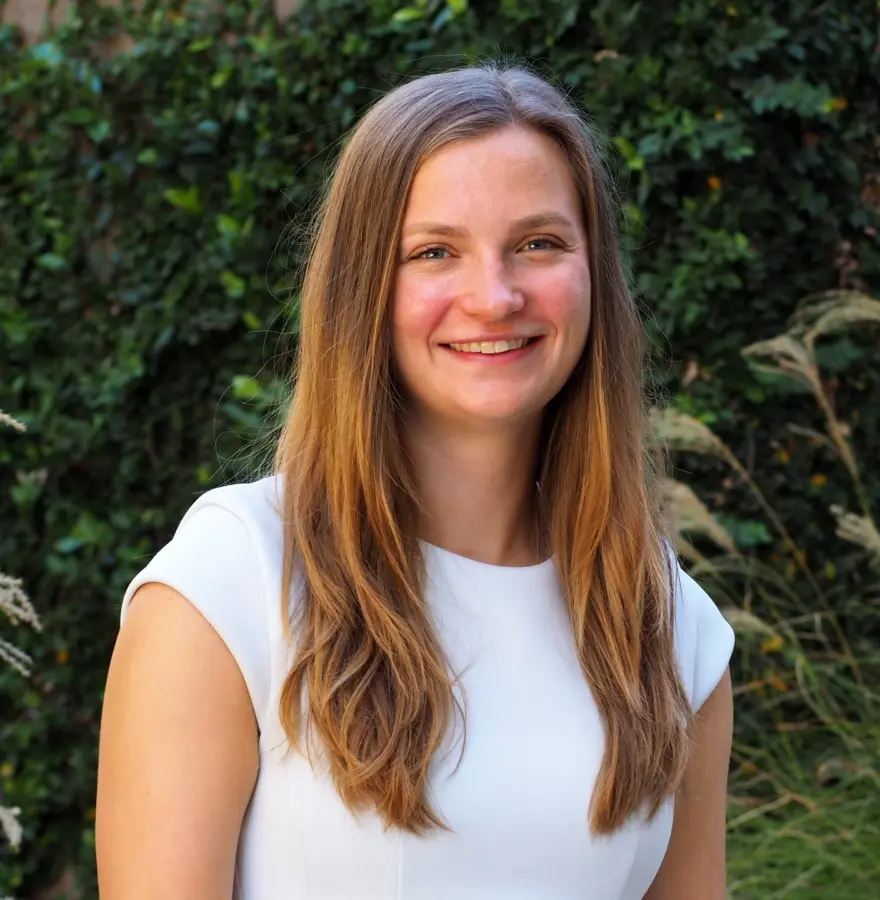
Sydney Erickson – Physics and Astronomy
Sydney Erickson is an astrophysicist studying the expansion of the universe and the fundamental forces shaping its evolution. At UCLA, she is working with Professor Tommaso Treu’s research group, which specializes in gravitational lensing, a phenomenon in which the gravity of massive objects bends light traveling from more distant galaxies and quasars.
Erickson uses gravitational lensing to measure how quickly the universe is expanding and investigate the nature of dark energy, the mysterious phenomenon associated with the accelerating expansion of the cosmos. She is developing methods that combine machine learning, statistical analysis and observations from major astronomical surveys, including the Vera C. Rubin Observatory, to study hundreds or potentially thousands of gravitational lenses.
Her goal is to develop increasingly precise, independent measurements of cosmic expansion that could help answer fundamental questions about the history and future of the universe. Her work at UCLA combines expertise in large-scale astronomical surveys with the Treu group’s research in precision cosmology.
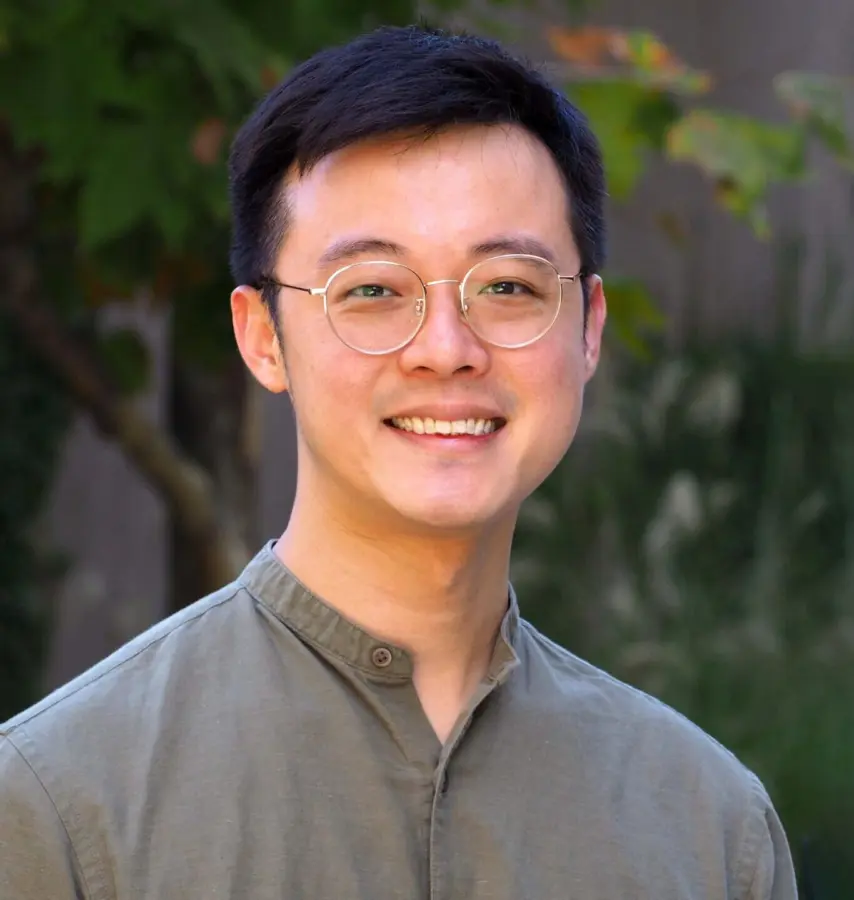
Yong Rui Poh – Chemistry and Biochemistry
Yong Rui Poh is a theoretical chemist whose research draws on concepts from multiple scientific disciplines to develop new approaches to chemical problems. He earned his bachelor’s degree in chemistry from the National University of Singapore, where he studied methods for organic synthesis, before completing his Ph.D. in theoretical chemistry at UC San Diego under Professor Joel Yuen-Zhou.
His doctoral research crossed several fields, including quantum information science, electrochemistry, chiral synthesis and polariton chemistry. At UCLA, Poh is conducting postdoctoral research in the laboratory of Professor Anastassia Alexandrova, whose group uses theoretical and computational approaches to investigate chemical systems and catalytic processes.
Poh’s research focuses on non-equilibrium thermodynamics and its potential to improve heterogeneous catalysis, in which catalysts accelerate chemical reactions involving substances in different physical phases. By exploring how chemical systems behave outside equilibrium, he hopes to uncover principles that can inform the design of more effective catalytic processes.
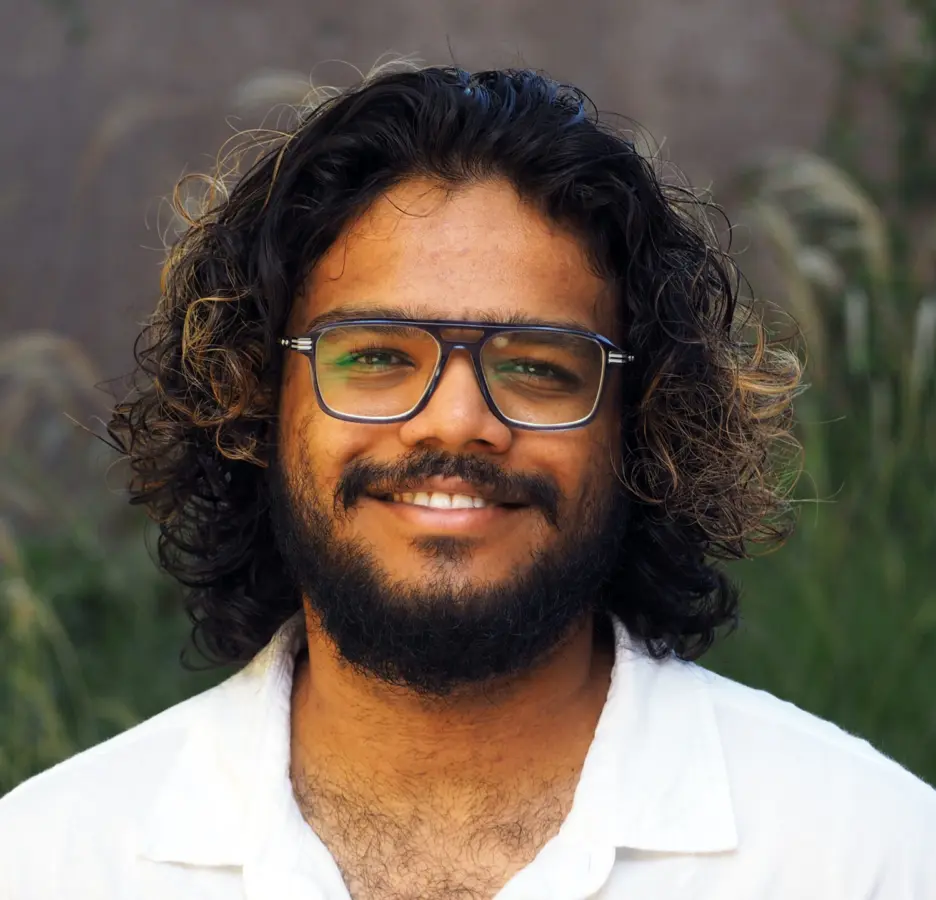
Sandeep Joy – Physics and Astronomy
Sandeep Joy joins UCLA from Florida State University, where he was a Quantum Initiative Postdoctoral Fellow at the National High Magnetic Field Laboratory. He earned his Ph.D. in physics from Ohio State University in 2024. A theoretical condensed matter physicist, Joy studies how interactions between electrons give rise to new phases of matter, including Wigner crystals, in which electrons organize into ordered structures rather than moving freely through a material.
At UCLA, Joy is working with Professor Anshul Kogar to investigate how ultrafast pulses of light can reveal or control unusual electronic states in quantum materials. His theoretical research draws on experimental observations to understand how strongly interacting electrons behave when materials are driven away from their usual stable states.
Joy’s broader research seeks to identify the principles governing collective electron behavior, including how quantum geometry and interactions influence the formation of new phases of matter. These insights could lay the groundwork for designing materials with novel properties, with potential long-term applications in quantum information science and emerging technologies.
Questions? Contact: bhaumikfellows@ucla.edu